Everyone talks about the skin barrier… but do we know what it actually is??
It’s become a bit of a buzz word. But if we don’t quite understand WHAT it is & HOW it works, we may still accidentally be damaging it..
So let’s take a look at what our skin barrier actually is.
It has three parts to it.
1: The microbiome
2: The stratum Corneum
3: The multi lamellar lipids
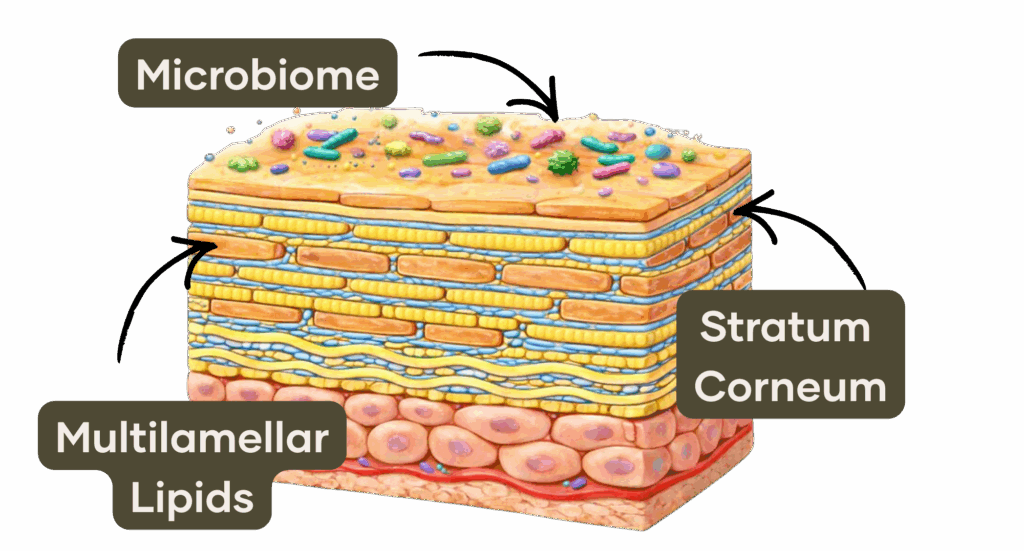
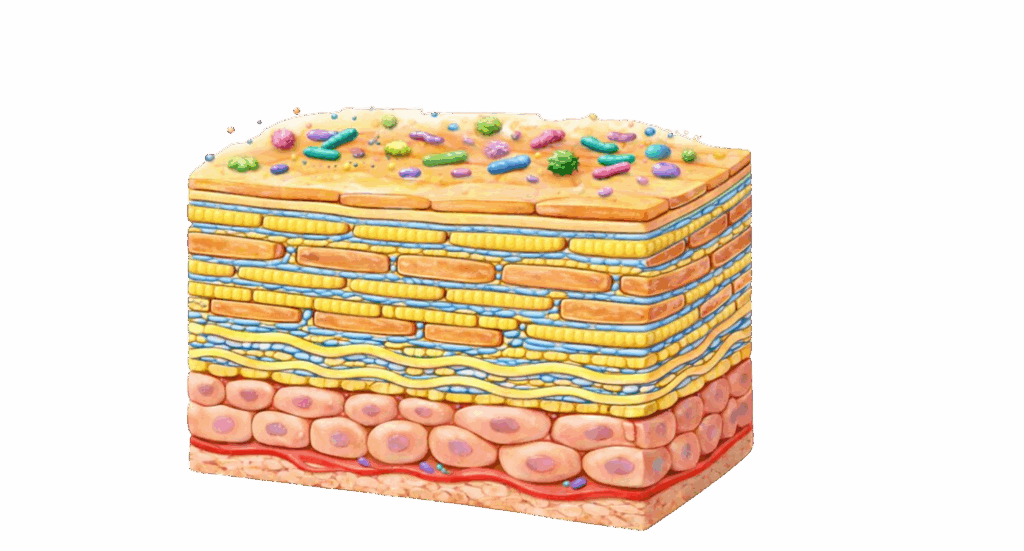
Firstly, the microbiome is an invisible coating on our skin that’s made up of oils, water and millions of bacteria These bacteria act like security guards, protecting us from pathogens, pollutants and environmental factors
The Stratum corneum are the skin cells in the very top layer of our skin. They compact together and are similar to the was roof tiles work, on a house. Creating a protective surface to keep bad things out and good things in.
The final part of the barrier, the multilamellar lipids, the ‘glue’, made up of oils and water, that sits between our cells and also coats the top cells. This is a bit like mortar between bricks, filling in gaps and supporting the overall structure of the skin.
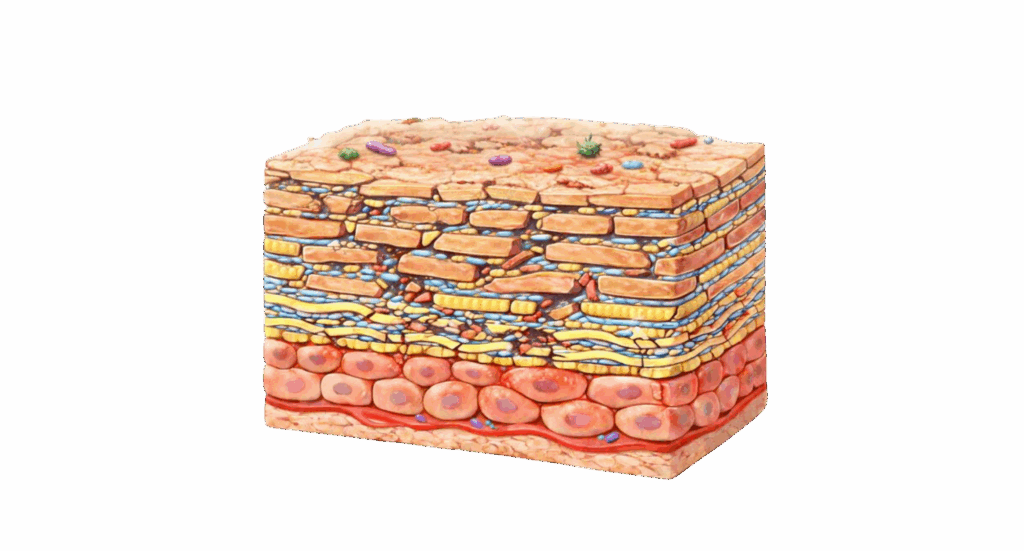
So what does it mean when we have an impaired barrier?
For a skin to barrier to become impaired, all it takes is one, two or all three of these parts to be damaged, not working, or their ability to do their individual roles have been disrupted.
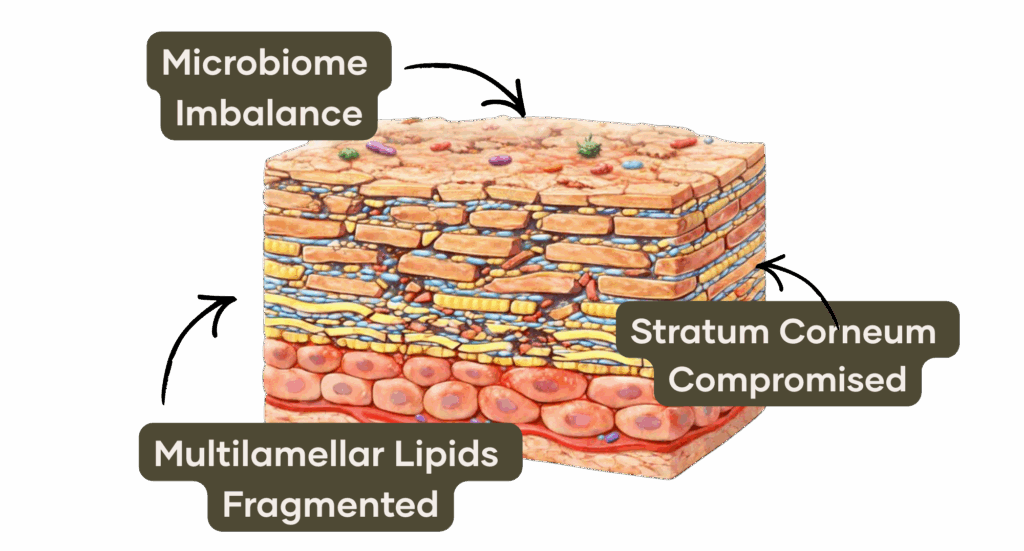
What disrupts the barrier?
Let’s look at Microbiome Disruptors:
Ingredients that remove or alter the bacterial balance:
Preservatives, acids, antibacterial agents, high-alcohol formulations and sometimes fragrances can impact the microbiome
Treatments that remove the bacteria or alter the ph balance:
Over cleansing, excessive exfoliation/resurfacing treatments like peels, scrubs, dermabrasions.
Lifestyle/environmental factors like swimming in a chlorinated pool, exposure to household cleaning products, pollution, sanitising products.
Yes our microbiome regenerates.
Some of these things will alter the microbiome for a moment, others for an extended period of time.
The longer it takes them to regenerate, the longer our skins natural defence systems are down. And we need to consider if the removal or disruption of the microbiome is supportive to the longer term health of the skin.
What disrupts the stratum corneum:
Whilst it’s not longer metabolically active, the stratum corneum or corneocyte not a ‘dead skin cell’. It is still signalling to the cells of the epidermis relaying information and sending messages to the cells below.
Ingredients that remove cells prematurely or accelerate desquamation:
Acids, abrasives, keratolytics that break down corneocyte bonds faster than can be replenished
Treatments that remove the top layers of cells:
Frequent exfoliation, resurfacing treatments (peels), Derma planning, abrasive treatments, stacking multiple resurfacing treatments (think microdermabrasion+peel combos)
Lifestyle/Environmental exposures that cause friction.
Facecloths, masks, pillow cases, skin grazes, picking and scratching, household cleaning products.
Things that breakdown the multilamellar lipids:
Ingredients with surfactants, emulsifiers, acids and toners the bind or dissolve lipids
Treatments that breakdown the lipids: over cleansing the skin, exfoliants and acids,
Lifestyle/environmental exposure.
Hot showers, soapy formulas, household cleaning products, nutritional deficiencies, low humidity environments (air conditioning). Chronic stress.
Most skin problems aren’t the result of something being wrong with the skin.
It’s more often a case of the barrier not being able to complete its role of protection.
When we:
• disrupt the microbiome,
• strip the stratum corneum,
• or break down the multilamellar lipids,
We don’t just change how the skin looks — we change how it behaves, signals, and defends itself.
The skin barrier isn’t a layer.
It’s a living system.
A system made up of: abalanced microbiome, functional corneocytes, organised lipid lamellae and constant communication with the deeper epidermis
When we respect that system: the skin self-regulates, treatments work better, inflammation calms, skins natural resilience returns.
Barrier-first care isn’t about doing less and being passive, it’s about prioritising the health of theses 3 parts and doing the right things, at the right time, in the right order.
And once the barrier is functioning well, our skin is healthier, we see life and vitality return to skin.
It’s important to understand the skin barrier and what we can do to nurture it.
And if you had a skin “aha” moment whilst reading this, you’ll love what I teach inside the Skinside Out Squad! It’s where the beauty industry goes to learn skin better!